
More than an agency: Berke Kızılcan and the BEMACCI story that began in Miami
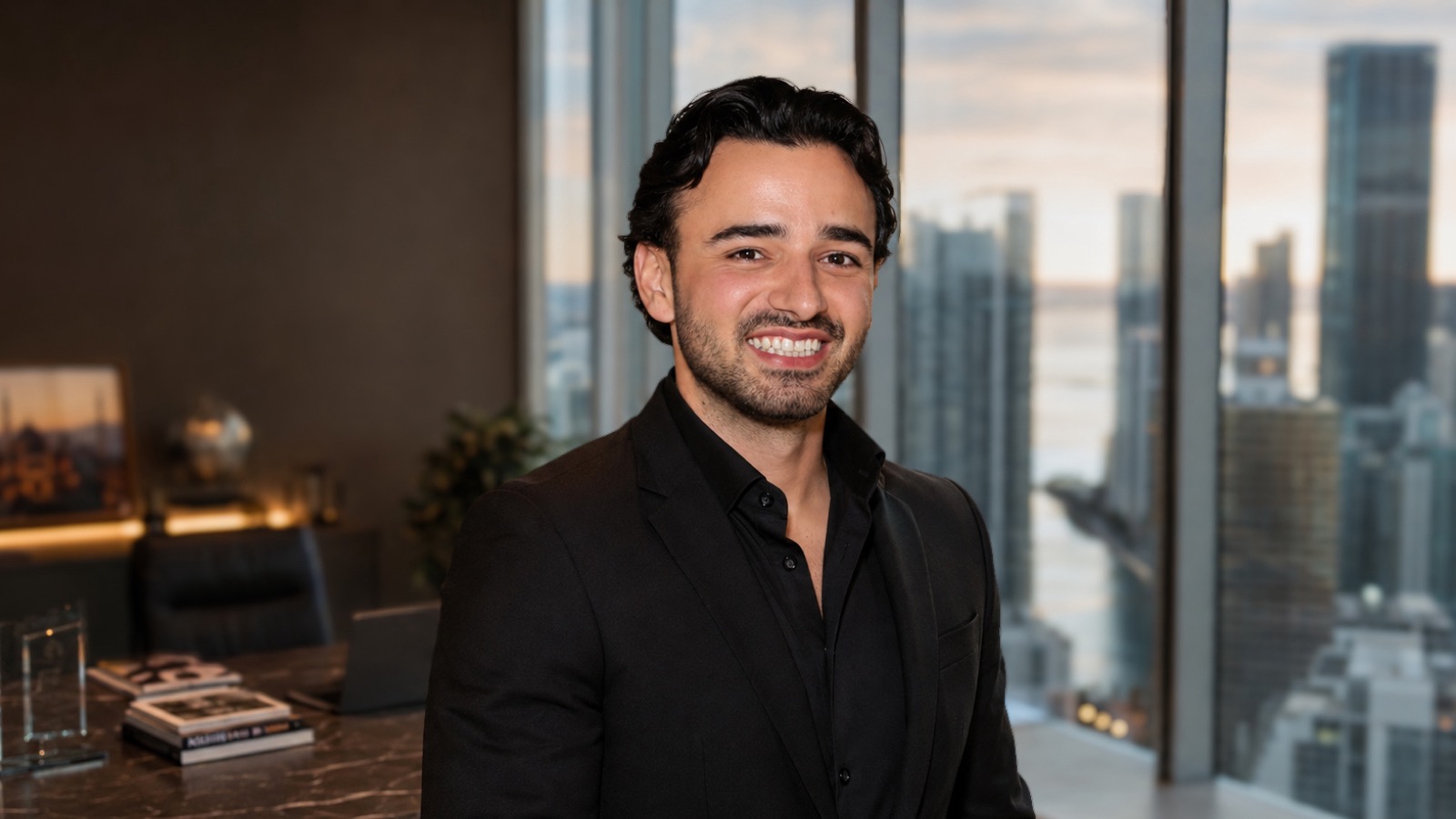
Born in Beşiktaş and educated in America, Berke Kızılcan founded BEMACCI, an agency that works between Istanbul and Miami. Get him onto marketing, and he moves away from the standard lines fast: "Don't try to make everyone see you."
“A brand does not need to be seen by everyone. It is enough for the right people to notice it.”
Berke Kızılcan
Some sentences in marketing feel familiar the moment you hear them. "Grow your brand." "Become more visible." "Stand out in digital." Talk to Berke Kızılcan for a while, though, and the conversation drifts away from all of them.
From Beşiktaş to America
Telling BEMACCI's story through Miami alone leaves out too much, because it starts somewhere else entirely: Beşiktaş, in Istanbul.
His story begins with a boy born and raised in Beşiktaş who, over time, moved himself beyond Türkiye. His education in America, the relationships he built with other cultures, and the way English and Spanish gradually became part of his daily life all play a significant role in how BEMACCI sees the world today.
Perhaps that is why, for Berke, "global" is not a word that belongs only to business. On one side there is Istanbul; on the other, America. In between: different languages, different cultures, and relationships built with different people.
“I have never felt that I belonged to only one place. I grew up in Beşiktaş, I studied in America, I have worked with people from different countries. Today I can speak four different languages. All of it changed the way I see the world.”
Berke Kızılcan
That journey is also the foundation of BEMACCI's ability to work across different markets today. Because for Berke, being global does not mean moving away from Türkiye. Quite the opposite: it means opening out to the world knowing exactly where you came from.
He does not see marketing as advertising, social media or content production alone. For him the question is more personal: what a brand makes people feel when it appears in front of them, what it says and, above all, what stays in their minds once the encounter is over.
BEMACCI is what came out of that approach. The agency now works between Istanbul and Miami, running communications, brand strategy, digital marketing and AI-focused work for brands in different markets — and its story began with a fairly simple question: why can't brands communicate the value they already hold?
An idea that started in Miami
To talk about BEMACCI's story you have to go to Miami first, because an important part of how the company was founded begins there.
Brickell, in Miami, is one of those districts where entrepreneurs, finance firms, technology teams and global brands from all over the world end up in the same place. Building the company there opened the way for BEMACCI to move, from its very first day, with a perspective that was never fixed on the Turkish market alone.
I ask him why Miami. The answer is short: "Because if you want to think globally, you have to be inside a global environment."
“Miami is not just a location for me. It is a city where very different cultures sit side by side and people are constantly trying something new. From Latin America to America, from Europe to Türkiye, you are in the same room with all kinds of people. That changes the way you look at marketing.”
Berke Kızılcan
BEMACCI still works between those two worlds. On one side, Türkiye's fast and dynamic market; on the other, America's more competitive, more global business culture. In his words, "bringing the advantages of two worlds together."
"When I founded BEMACCI, I did not want to build a conventional agency"
There is one point he keeps returning to as he describes how the company started: it was never the goal for BEMACCI to be simply "a marketing agency."
"Starting an agency is a very easy thing," he says. "You find a name, you build a website, you open an Instagram account and you list your services. But that was not what I wanted to do."
So what was it? "I wanted to understand how brands actually grow."
Good marketing, in his view, is not about putting a brand in front of more people; it is about clarifying who the brand is, positioning it correctly and saying that in a way people can understand.
“You can produce 50 pieces of content for a brand. But if the brand does not know what it is saying, those 50 pieces do not mean very much.”
Berke Kızılcan
That is why work at BEMACCI rarely starts with content. The brand comes first. Then strategy. Then communication. And only at the very end, how all of it looks from the outside.
"Being seen and being remembered are not the same thing"
This is perhaps the subject that explains his view of marketing best. Most brands today are trying to be visible: more followers, more video, more advertising, more content. He does not think that is enough on its own.
"There is a serious difference between people seeing you and people remembering you." He is quite clear as he says it. "You see something on Instagram, two seconds later something else appears. People's attention span is very short. In an environment like that, simply being visible is no longer an achievement."
Brands, he argues, should be asking themselves a different question: what will stay in people's minds after they have seen us? BEMACCI's approach takes shape around exactly that. Building a more meaningful kind of communication rather than producing more noise. He sums it up in two words: strategic visibility.
“We do not want to be seen everywhere. We want to be seen in the right place.”
Berke Kızılcan
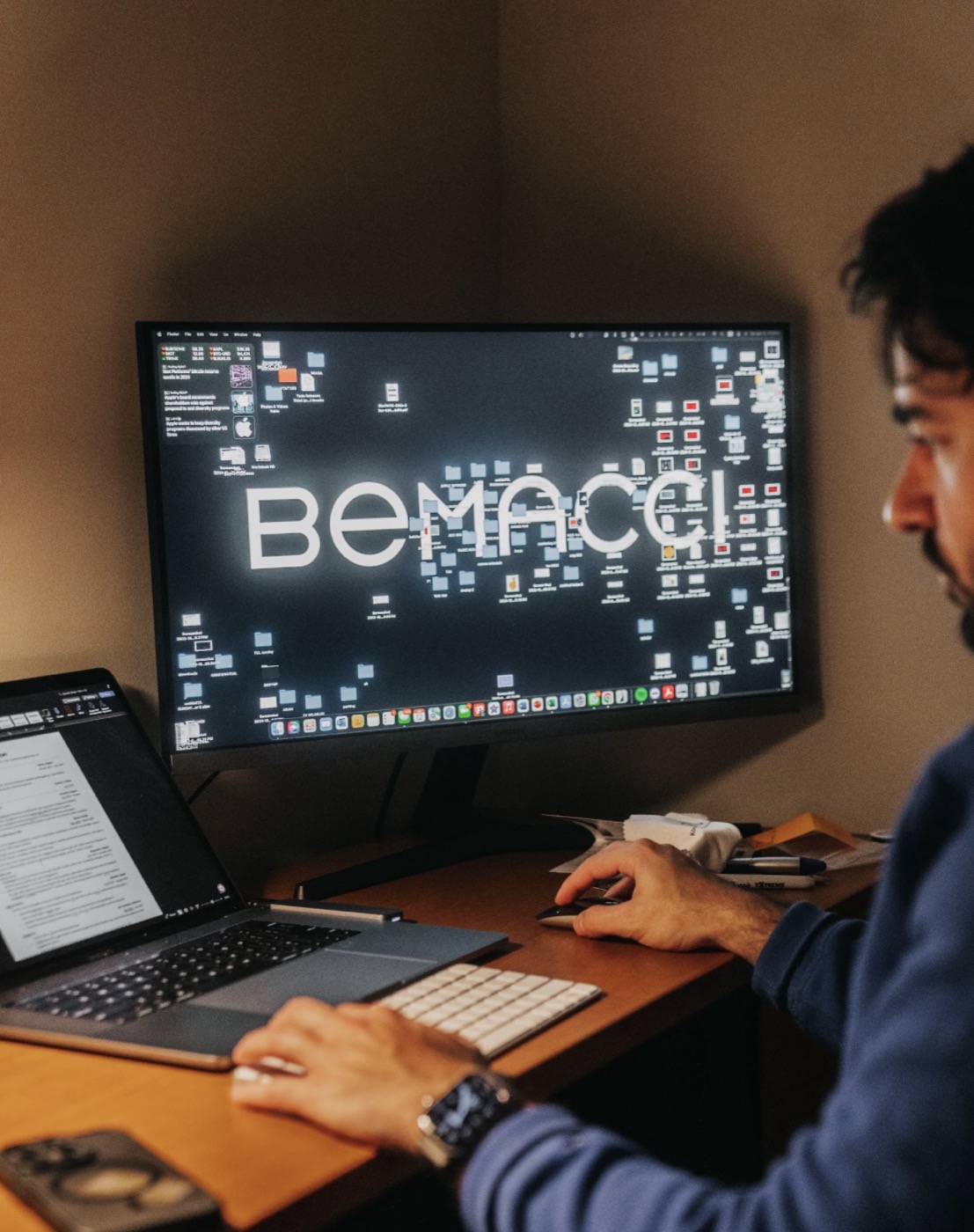
Where does AI fit in?
At some point the conversation turns, inevitably, to artificial intelligence. Here too it is clear he thinks a little differently: "If you use AI only to have content written, I think you are using a very small part of its potential."
The real change, in his account, is in the way AI changes how a company works. Research, analysis, content production, automation, client processes, data — all of it managed faster and more intelligently. "For us, AI is less a tool than an infrastructure."
This is where BEMACCI's "AI-native" approach comes in. What he wants to convey is fairly simple: "Instead of spending people's time on repetitive work, we want to reserve human intelligence for strategy and creativity."
“AI does not turn a wrong strategy into a right one. It only lets you do the wrong thing faster.”
Berke Kızılcan
From Türkiye to the world
The same global outlook sits behind BEMACCI's work in different countries today. For Berke, being a "global brand" does not mean speaking English or holding an address in America: "If you are taking a brand into another country, you have to understand the people of that country."
A message that works in Türkiye, he explains, may not produce the same result in America. And there are serious differences, he says, between the communication language of Latin America and that of Europe. "Global marketing actually requires reading culture."
BEMACCI's work with brands from different sectors and with international institutions is partly a consequence of that. Moving between projects that run from technology to consumer brands, from startups to international organisations, lets him, in his own phrase, "look at the same problem through a different window every time."
And Berke's own brand?
Here the conversation changes direction, because how a marketer manages his own brand is often more interesting than the advice he gives everyone else. I ask him how he positions himself. He thinks for a while. "I am not someone who tries to be very visible," he says.
The answer lines up closely with the strategic visibility approach he had described a few minutes earlier. "I want to show the work I do, but I don't want to be constantly showing myself."
Personal brand, for him, works the same way: "It is not very important for people to recognise you from a profile picture. It matters more that they know what you do, how you think and what you put out into the world." Perhaps that is exactly what makes the relationship between BEMACCI and Berke interesting: the person behind the company applies the idea the company argues for in his own life.
"A good brand does not have to keep explaining itself"
Towards the end of the interview the conversation returns to brands. What, for him, is the most important quality of a good brand? This time the answer is shorter: "Consistency."
He pauses. "If what you say and what you do are the same, people start to trust you. You cannot behave like a premium brand one day and a completely different one the next."
Strong brands, he says, do not have to keep explaining themselves, because people come to know them over time: they know what the brand will do, they know what it will say, and they know how they will feel when they come across it. "I think that is part of what being a brand means."
What is BEMACCI's next step?
Finally, I ask him where he sees BEMACCI a few years from now. "Being bigger is nice, of course," he says. "But that is not the only goal for me."
He says he wants to build better systems. To work in more markets, to integrate AI further into the centre of the business, and to create a global structure that came out of Türkiye. But there is one thing among all of it he does not want to change: "I don't want to lose who we are."
That may be the sentence that describes BEMACCI's story most accurately. A company that started in Miami, built a strong tie to Istanbul and keeps opening into more markets. One that uses technology without hiding behind it. One that cares about visibility without speaking merely to be seen.
As the interview closes I put one last question to him: if you had to describe BEMACCI in a single sentence? This time he answers without pausing to think:
“Do not try to make everyone see you. Make the right people remember you.”
Berke Kızılcan
Which may be exactly what BEMACCI is trying to do today. Not making more noise — finding the right voice.
About this piece. This piece was produced by the BEMACCI newsroom and published on bemacci.com. BEMACCI is a creative and commercial partner bringing strategy, creative production and marketing together, working from Istanbul, London and Miami. Contact: [email protected]